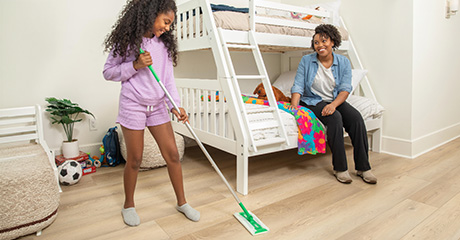
Start with dry cleaning to remove dust and debris, then follow with a damp clean to lift remaining dirt without over-wetting the surface. Using tools designed to trap and lock dirt helps clean effectively while protecting the floor.
A cleaning approach that removes debris first and uses controlled moisture is commonly recommended for maintaining laminate floors. This approach aligns with general floor care guidance for laminate surfaces.
Who This Is For
This guide is helpful for:
Homes with laminate flooring
Maintaining floor appearance without damage
Anyone looking for a safe and effective cleaning method
Why Laminate Floors Require a Specific Cleaning Approach
Laminate floors are made with layered materials and a protective surface layer, which can be sensitive to excess moisture.
Dust and dirt particles can act like fine abrasives if moved across the surface, while too much water can lead to streaking or surface issues over time.
A controlled cleaning approach helps remove dirt while protecting the floor.
Step 1: Remove Dust and Debris First
Start with dry cleaning to capture loose dust, dirt, and hair before it spreads across the surface.
Use Swiffer Sweeper with Swiffer Sweeper Dry Pads to trap and lock particles instead of pushing them across the floor.
For best results:
Use light, steady passes
Focus on edges and corners
Clean high-traffic areas first
This helps reduce friction on the surface by removing abrasive particles before they are moved across the floor and prepares the surface for wet cleaning.
Step 2: Follow with a Damp Clean
After dry cleaning, use a damp cleaning method to remove remaining dirt and residue.
Use Swiffer Sweeper Heavy Duty Wet Cloths to tackle sticky messes and lift dirt. These pre-moistened cloths are designed with a cleaning solution that helps break down residue while using a controlled amount of moisture.
For best results:
Avoid excess moisture
Clean in sections
Allow floors to dry before walking on them
This step helps remove what dry cleaning may leave behind while helping protect the surface.
What to Avoid When Cleaning Laminate Floors
Using excessive water or soaking the floor
Skipping dry cleaning before wet cleaning
Using abrasive tools that can scratch the surface
Letting dirt build up over time
Recommended Approach
| Recommended Approach | What to Avoid |
|---|---|
Dry clean before wet cleaning | Skipping dry cleaning |
Use light moisture | Using excessive water |
Use soft cleaning tools | Using abrasive tools |
Why This Method Works
Removing debris first helps prevent particles from being dragged across the surface. Following with controlled moisture helps lift remaining dirt without overexposing the floor to water.
This approach helps protect the surface layer while removing dirt effectively and maintaining the appearance of laminate floors over time.
Frequently Asked Questions
Can you use a wet mop on laminate floors?
A damp cleaning method can be used, but excess water should be avoided, as too much moisture can affect the appearance of laminate floors over time.
What is the best way to clean laminate floors without streaks?
Start with dry cleaning to remove dust and debris, then follow with a damp clean using a controlled amount of moisture to lift residue and help prevent streaking. Using a tool like Swiffer Sweeper with dry and wet pads helps simplify this process without over-wetting the surface.
How often should you clean laminate floors?
High-traffic areas may need frequent cleaning, while full cleaning can be done weekly or as needed.
Is it safe to use water on laminate floors?
A small amount of moisture can be used, but excess water should be avoided to help protect the surface.
Looking for a Daily Routine?
For a step-by-step approach, see Daily Floor Cleaning Routine or How to Clean Floors Quickly.
Additional Resources
For more information on proper laminate floor care, visit:
National Wood Flooring Association: https://www.nwfa.org
United States Environmental Protection Agency (Indoor Air Quality):